

Graphic design isn’t decoration. It’s infrastructure.
Whether you’re a startup in Hoboken trying to look credible or a construction firm in Newark needing consistency across print, pitch decks, and digital — graphic design is what holds your brand together.
From logos and websites to social campaigns and sales presentations, every touchpoint either builds trust or quietly destroys it.
AI tools now play a major role in design workflows. Some help. Others harm. This guide cuts through the fluff.
We’ll break down the 10 types of graphic design every US business needs, and how AI tools can support (but not replace) proper design systems.
This isn’t theory. This is the difference between growth and waste.
Why Graphic Design Still Matters — Even in The Age of AI
AI tools can spit out layouts, colours, and mockups — but only a professional graphic design agency can turn them into a cohesive, high-performing brand system.
But they can’t:
- Define what your brand stands for
- Tell your story to real humans
- Understand audience psychology in the Tri-State area
- Make you look credible in competitive markets like New Jersey or New York
Graphic design matters because it:
- Shapes first impressions in seconds
- Drives recognition across formats
- Builds trust and drives buying behaviour
- Keeps your brand coherent across platforms
Bad design isn’t neutral. It’s a business risk.
How AI Tools Should Support Design — Not Replace It
Used correctly, AI speeds up production.
Used incorrectly, it creates:
- Generic visuals
- Brand drift
- A “template” look customers sniff out immediately
AI tools work best when:
- A strong brand identity already exists
- Visual systems and rules are in place
- Designers remain in charge of key decisions
AI should do the heavy lifting. Strategy, taste, and control must stay human.
1. Brand Identity Design (The Foundation)
Your logo. Colours. Fonts. Visual language. Everything begins here.
AI can generate ideas — but identity must be human-led.
A strong identity system ensures:
Brand recognition across the US market
Visual consistency in digital and physical environments
Flexibility across formats (print, motion, social)
This is the foundation. Don’t outsource it to an algorithm.
2. Marketing & Advertising Graphic Design
This is how you win attention and convert it.
Includes:
Google Display ads
Instagram campaign visuals
Email marketing graphics
Conversion-focused landing assets
AI tools can help scale variants. Designers keep campaigns on brand and optimised.
3. Social Media Graphic Design
Your audience should recognise your content instantly — before they read a word.
Strong design systems beat content volume every time.
Includes:
Post templates
Reels/motion graphics
Story and ad formatting per platform
AI can help output volume. Designers maintain tone, polish, and visual recognition.
4. Web & UI Graphic Design
Great web design drives user action. Full stop.
Good design:
Guides attention
Reduces bounce
Drives conversion
AI can generate layouts. But it doesn’t understand:
Your customers
Your sales funnel
Your unique selling points
That’s the difference between design and decoration.
5. Packaging Graphic Design
Design gets you picked off the shelf — or scrolled past.
In the US, packaging must:
Stand out instantly
Communicate value fast
Stay compliant with legal/retail standards
AI helps with mockups. Designers ensure product clarity, brand alignment, and shelf impact.
6. Motion Graphics & Visual Animation
Motion adds:
Energy
Clarity
Memorability
Used for:
Explainer videos
Website animations
Digital ads
AI helps automate components. But coherence and story require real creative direction.
7. Presentation & Sales Graphic Design
Your pitch is only as good as your slides.
Great design helps:
Simplify complex ideas
Build credibility
Support your voice (not fight it)
AI helps format decks. Designers build the narrative structure and flow.
8. Print Graphic Design
Still essential for:
Trade shows
Local campaigns
Print brochures and mailers
AI can revise layouts. Designers ensure print-readiness, legibility, and physical impact.
9. Infographic & Data Visualisation Design
Design transforms data into clarity.
Infographics:
Make reports readable
Drive retention in sales materials
Support investor and stakeholder trust
AI processes data. Designers shape the story.
10. Environmental & Signage Design
This includes:
Vehicle wraps
Trade show banners
Retail/office signage
For companies in NJ/NY, environmental graphics signal legitimacy in physical spaces.
How To Prioritise Design Types (Without Wasting Budget)
Every business doesn’t need all 10 at once.
Start by mapping:
Your business goals
Key customer touchpoints
Your market pressure (local vs. national)
Then invest accordingly.
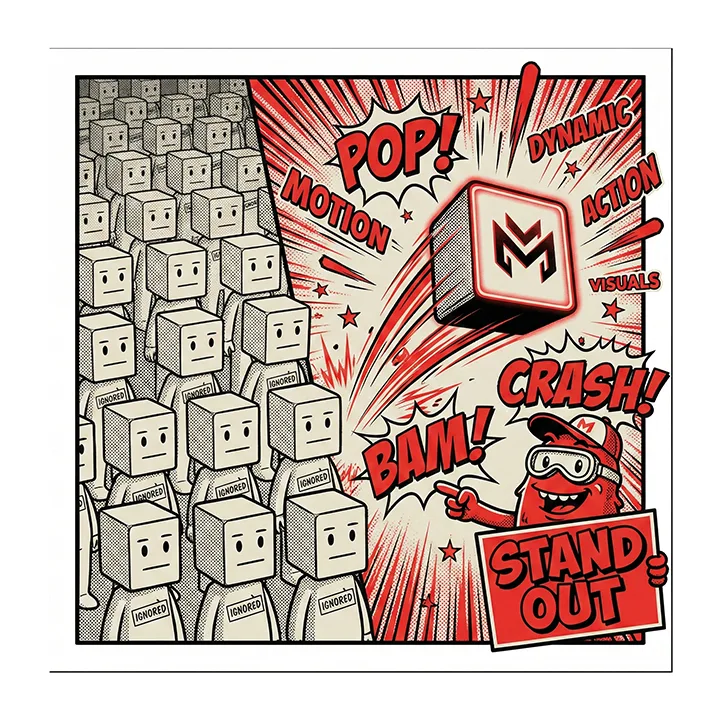
Motion Monsters Does It Differently
At Motion Monsters, we’re not another Canva+AI agency — we’re a performance-driven graphic design agency focused on building scalable brand systems.
We build design systems — real ones — then use AI to speed up delivery, scale assets, and reduce bottlenecks.
AI is the power tool. We’re the master builder.
Frequently Asked Questions
What are the most important types of graphic design for brands?
The most important types include brand identity, web design, marketing graphics, social media design, and packaging. These ensure consistency across all customer touchpoints and help businesses build recognition and trust.
Why is graphic design important for business growth?
Graphic design shapes first impressions, builds brand recognition, and influences customer decisions. Strong visuals can increase engagement, improve credibility, and drive conversions across digital and offline channels.
What is brand identity design in graphic design?
Brand identity design includes logos, colors, typography, and visual systems that define how a brand looks and feels. It ensures consistency across platforms and helps customers instantly recognise a business.
How does marketing graphic design help businesses?
Marketing design helps businesses attract attention and convert users through ads, social media creatives, email visuals, and landing page graphics. It plays a key role in generating leads and increasing sales.
What is the role of web and UI design in branding?
Web and UI design improve user experience by making websites easy to navigate, visually appealing, and conversion-focused. Good design reduces bounce rates and encourages users to take action.
Why is social media graphic design important?
Social media design ensures your brand is instantly recognisable across platforms. Consistent visuals help increase engagement, improve brand recall, and make content stand out in crowded feeds.
What is packaging design and why does it matter?
Packaging design focuses on how products look and communicate value. It helps products stand out on shelves, convey brand messaging, and influence buying decisions quickly.
How do motion graphics benefit brands?
Motion graphics add visual engagement, storytelling, and clarity to content. They are commonly used in ads, explainer videos, and websites to improve user retention and communication.
What is infographic and data visualisation design?
This type of design transforms complex data into easy-to-understand visuals, helping businesses communicate insights clearly and improve audience understanding and retention.
How should businesses prioritise different design types?
Businesses should prioritise based on goals, audience touchpoints, and budget. Start with brand identity and web design, then expand into marketing, social media, and other design areas as needed.
Which type of graphic design delivers the fastest ROI?
Web design and marketing graphics typically deliver the fastest ROI because they directly impact user experience, conversions, and lead generation.
Ready To Compete Visually?
If you’re serious about building a brand that stands up in New Jersey, New York, or anywhere across the US — let’s talk.