


Introduction
New Jersey businesses operate in one of the most competitive digital landscapes in the United States. With direct overlap from New York and Philadelphia markets, ranking well in search is not just about visibility. It is about survival.
Local searches drive immediate, high-intent leads. National rankings unlock scale, authority, and long-term growth. The challenge for New Jersey companies is doing both at the same time without diluting results.
Businesses investing in SEO services in New Jersey face a unique challenge — competing locally while NYC bleeds into search results. It covers what actually works now, how AI has changed search behaviour, and how to structure your website and content to rank locally, nationally, and inside emerging AI search results. It covers what actually works now, how AI has changed search behaviour, and how to structure your website and content to rank locally, nationally, and inside emerging AI search results.
If your business relies on being found online, these SEO strategies provide the framework you need to grow, compete, and thrive.
Why SEO is Different for New Jersey Businesses
New Jersey is densely populated, highly competitive, and geographically compressed between two major metro markets. That creates three realities:
Local SEO competition is intense at city and county level
Many NJ businesses compete with NYC companies in organic results
Customers often include “NJ” or town names in search queries
An effective SEO strategy in New Jersey must balance hyper-local visibility with broader authority signals that allow you to compete beyond state borders.
Local SEO New Jersey: Strategies That Actually Work
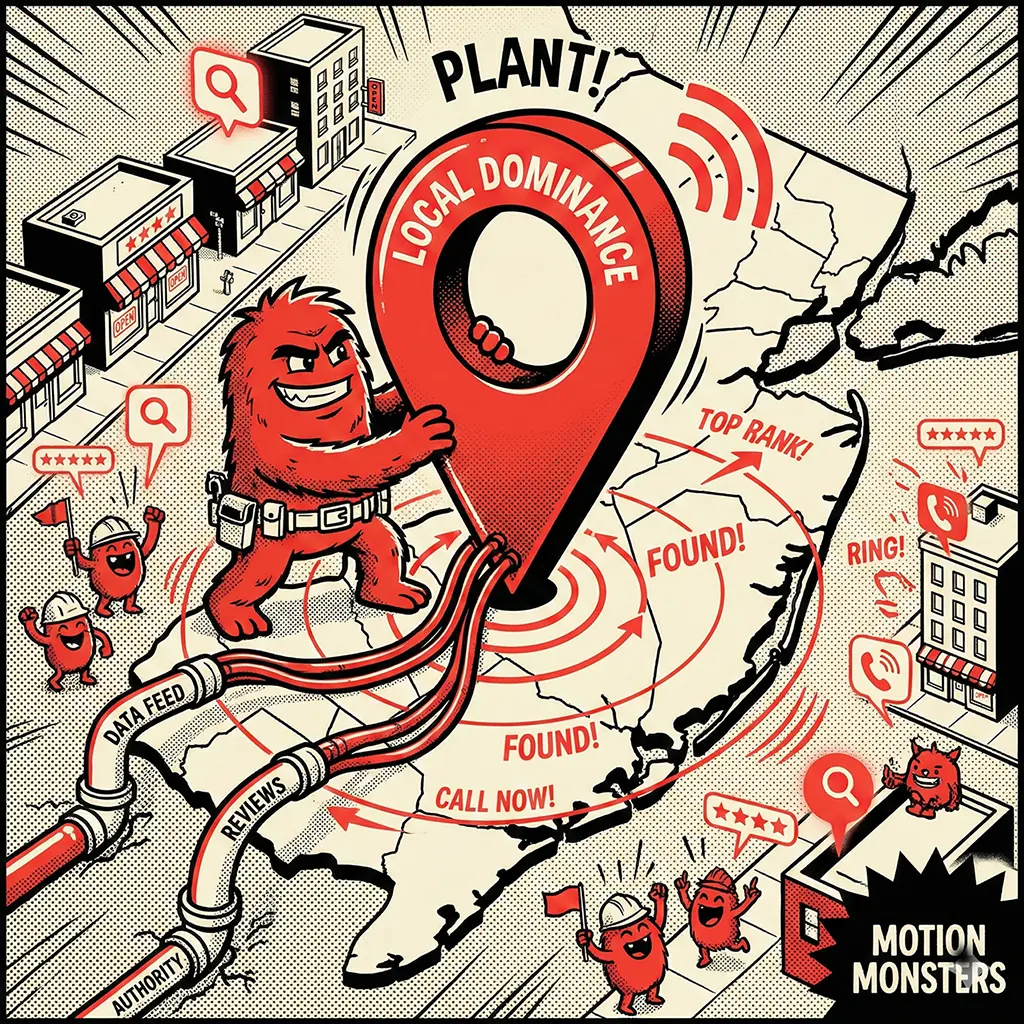
These local SEO strategies are focused on winning searches where proximity and trust matter most.
Google Business Profile Optimisation
Your Google Business Profile is the single most important local ranking asset.
Best practices:
Correct and consistent name, address, phone number
Accurate categories and services
Regular photo uploads
Ongoing review acquisition
Active responses to reviews and questions
An inactive profile signals low relevance. An optimised profile dramatically increases your chances of appearing in the local map pack.
Local Citations and Nap Consistency
Your business information must be consistent across:
Google
Bing
Apple Maps
Yelp
Facebook
Industry directories
NJ-specific business listings
Inconsistent phone numbers or addresses weaken trust signals and suppress rankings.
Location-focused Website Pages
If you serve multiple towns or counties, you need dedicated location pages.
Effective location pages include:
City or county in title and headings
Local service descriptions
Embedded Google Map
Local testimonials
Clear contact information
This allows you to rank for searches like “commercial video production Newark NJ” rather than competing only for broad terms.
Reviews and Local Trust Signals
Google treats reviews as a ranking signal and a conversion signal.
Focus on:
Review velocity, not just total count
Google reviews first, then niche platforms
Responding to every review professionally
Avoiding incentivised or fake reviews
High-quality reviews increase both visibility and click-through rates.
Localised Content
Content should reflect local realities.
Examples:
NJ regulations or compliance topics
Case studies from New Jersey clients
Industry insights tied to NJ markets
Town or county references where natural
This reinforces geographic relevance without keyword stuffing.
National SEO Strategies for Scaling Beyond New Jersey
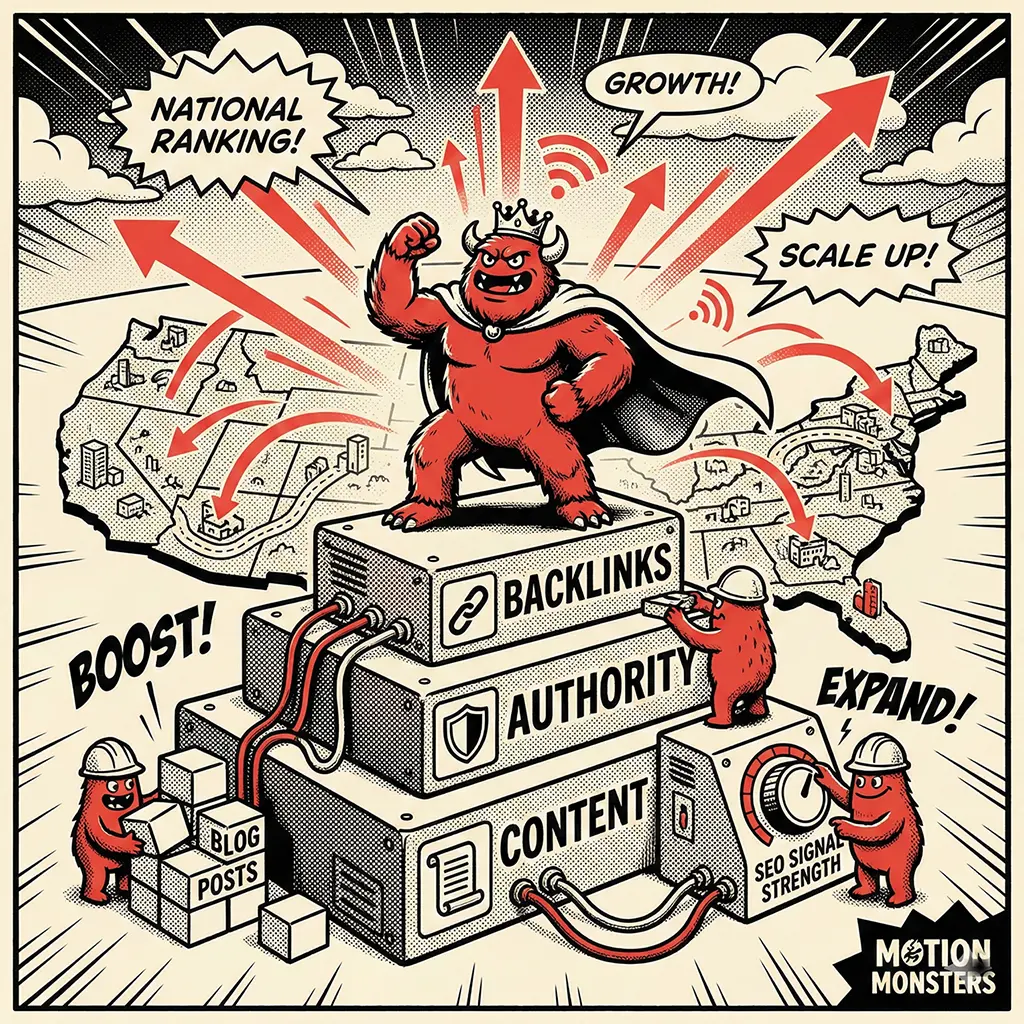
National SEO removes geographic qualifiers and increases competition dramatically. It requires authority, depth, and trust.
To grow beyond local visibility, businesses need broader SEO marketing strategies that combine content depth, authority building, and technical optimisation.
Topical Authority and Content Depth
Ranking nationally requires comprehensive content that fully satisfies search intent.
This means:
Long-form guides
Comparison content
Industry resources
Topic clusters rather than isolated blog posts
Google rewards sites that demonstrate depth across a subject area, not just individual keywords.
E-E-A-T: Experience, Expertise, Authority, Trust
In 2026, E-E-A-T is non-negotiable.
Strengthen it by:
Publishing expert-led content
Showing credentials and real experience
Featuring case studies and outcomes
Maintaining transparent business information
Securing authoritative backlinks
This is especially critical for legal, financial, healthcare, and B2B sectors.
Brand Signals and Search Demand
Strong brands rank more easily.
SEO benefits from:
Branded search growth
Media mentions
Consistent social presence
Podcast appearances
Industry visibility
Search engines favour entities people actively search for and trust.
High-quality Link Acquisition
Links remain one of the strongest ranking signals.
Focus on:
Industry publications
Digital PR
Original research or data
Strategic partnerships
Thought leadership contributions
Avoid low-quality directories and paid link schemes.
AI-Driven SEO in 2026
Search engines now operate on AI-driven understanding rather than keyword matching.
Semantic SEO and Intent Coverage
Optimise for meaning, not exact phrases.
Cover:
Related concepts
Common questions
Supporting subtopics
Natural language phrasing
This allows content to rank for dozens or hundreds of variations.
Content Clusters and Internal Linking
Use pillar pages supported by detailed sub-pages.
This structure:
Improves crawl efficiency
Builds topical authority
Enhances user experience
Strengthens internal ranking signals
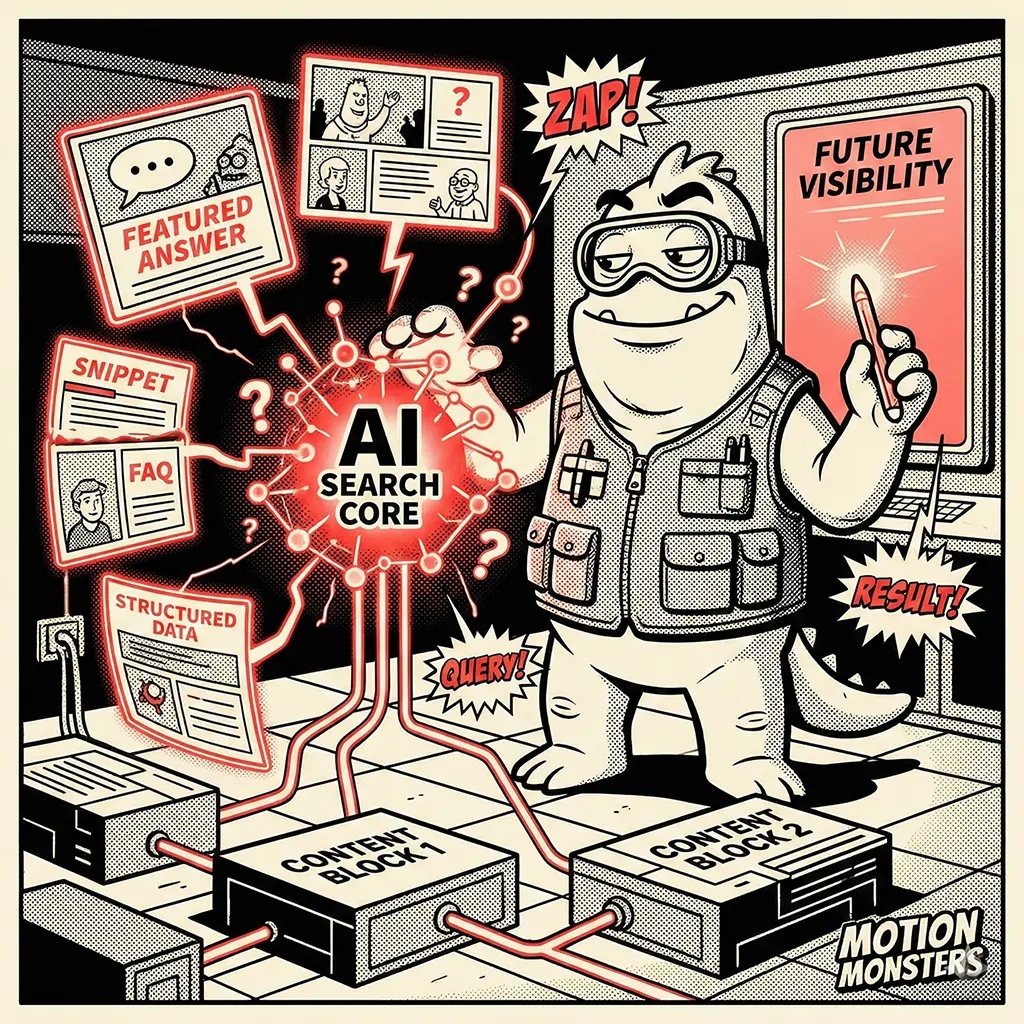
AI-Ready Content Structure
To appear in AI summaries and answer engines:
Use clear headings
Answer questions directly
Include concise definitions
Maintain factual accuracy
Update content regularly
Structured, factual content is more likely to be cited by AI systems.
Technical SEO Foundations
Technical SEO is not optional.
Core Web Vitals
Optimise:
Largest Contentful Paint
Interaction to Next Paint
Cumulative Layout Shift
Fast, stable websites outperform slower competitors in both rankings and conversions.
Mobile-First Performance
Most searches occur on mobile.
Your site must:
Load quickly on mobile
Be easy to navigate
Have accessible forms and buttons
Avoid intrusive pop-ups
Schema Markup
Use structured data for:
Local business details
FAQs
Articles
Products
Reviews
Schema improves click-through rates and AI comprehension.
Site Structure and Crawlability
Ensure:
Logical navigation
Strong internal linking
XML sitemap
Clean URLs
Proper index control
Search engines should easily understand what matters most on your site.
New Jersey Industry-Specific SEO Considerations
Different industries require different emphasis:
Construction and trades rely heavily on local SEO and reviews
Legal and financial firms must prioritise E-E-A-T
Retail blends local foot traffic with national ecommerce SEO
B2B and manufacturing require authority-driven content and backlinks
Strategy must align with how buyers search in your industry.
Final Thoughts
SEO for New Jersey businesses in 2026 is not about hacks or shortcuts. It is about clarity, authority, technical discipline, and content that genuinely helps users.
Businesses that invest consistently in SEO build a compounding advantage. Those that delay are forced into paid advertising dependency.
Partnering with an experienced New Jersey SEO consultant ensures your strategy is built for NJ market realities, not just generic best practices.The sooner the foundation is built, the harder it becomes for competitors to catch up.get in touch today to start building a stronger, more competitive online presence.
Frequently Asked Questions
What is local SEO for New Jersey businesses?
Local SEO focuses on ranking for searches tied to geographic locations such as cities, towns, and “near me” queries.
How long does SEO take to work?
Local results may improve within 3–4 months. National SEO typically takes 6–12 months.
Is Google Business Profile essential?
Do reviews affect SEO rankings?
Yes. Review quality, quantity, and recency influence local rankings.
Can NJ businesses rank nationally?
Yes, with sufficient authority, content depth, and backlinks.
What is E-E-A-T in SEO?
Experience, Expertise, Authority, and Trust signals used by Google to assess content quality.
How does AI impact SEO?
What is semantic SEO?
Optimising content around meaning and related concepts rather than exact keywords.
Are backlinks still important?
Yes. Quality backlinks remain one of the strongest ranking factors.
What is Core Web Vitals?
User experience metrics measuring speed, responsiveness, and visual stability.
Does mobile performance affect rankings?
Yes. Google uses mobile-first indexing.
Should FAQs be included on pages?
Yes. FAQs improve long-tail visibility and AI search inclusion.
Is schema markup worth implementing?
Yes. It improves visibility and AI readability.
Can small businesses do SEO themselves?
Basic SEO can be DIY. Competitive markets often require expert support.
How often should content be updated?
High-value pages should be reviewed every 6–12 months.
Does social media impact SEO?
Indirectly through brand signals and content distribution.
Should AI tools be used for content?
Yes, with human editing and factual verification.
Is AI safe for healthcare and dental businesses?
It can be, but you must use tools designed for compliance and protect sensitive data. Avoid feeding patient information into systems that do not clearly support secure handling.
What is topic clustering?
Grouping related content to build authority around a subject.
Do NJ businesses compete with NYC companies?
Yes, especially in North Jersey markets.
Is SEO still worth investing in?
Yes. SEO remains one of the highest ROI digital channels when done correctly.
