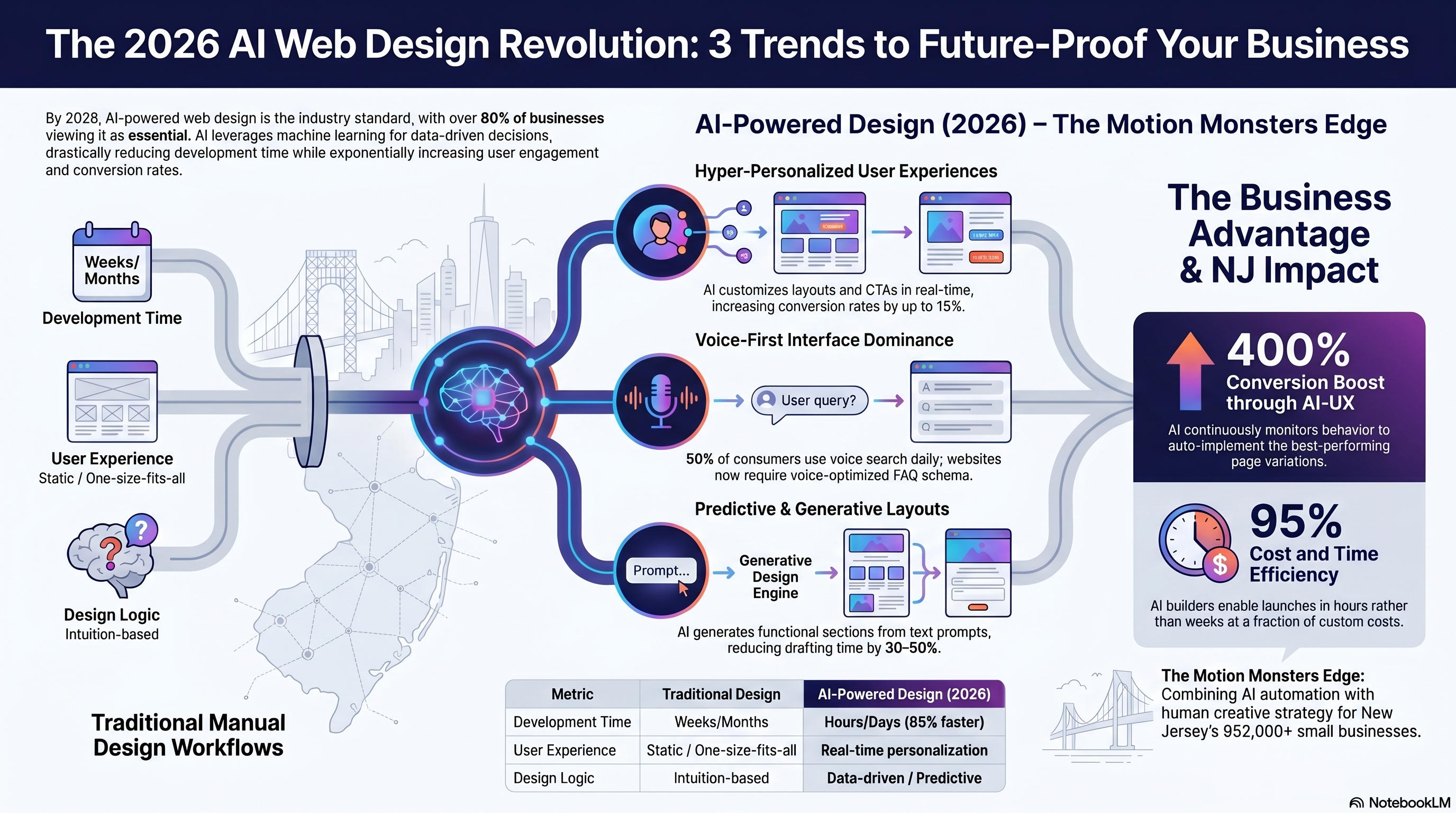


AI-powered web design is reshaping how websites are built, optimized, and experienced in 2026. From automated layout generation to real-time personalization, AI tools are making websites smarter, faster, and more conversion-focused than anything traditional design methods could deliver alone. Businesses that adopt these trends now are pulling ahead of competitors still relying on static, manual-build websites.
Artificial intelligence integration is no longer a future-facing technology decision — it is the baseline expectation for any business website that needs to perform in 2026. Across industries, the challenge is the same: low engagement, poor conversion rates, manual processes eating up time, and websites that look modern but fail to deliver results.
AI changes all of that. From AI-powered automation that eliminates repetitive management tasks to intelligent personalization engines that adapt content in real time, AI integration turns a static website into a working business system. 78% of companies have now adopted AI in at least one business function, and the global AI website builder market alone is projected to reach $3.24 billion in 2026 — up from $2.69 billion in 2025.
This is a practical guide to how AI integration works in web design, the technologies driving it, and how businesses can deploy it to generate more leads, improve user experience, and grow faster. Motion Monsters works with businesses across New Jersey and beyond to deliver exactly that — AI-powered web solutions built around real commercial outcomes.
What Is AI integration in Web Design?
Artificial intelligence integration in web design is the embedding of machine learning, automation, and data-driven intelligence directly into a website’s architecture and user experience. It moves the website beyond static design — beyond a digital brochure that looks the same for every visitor — toward an intelligent system that learns, adapts, and continuously improves based on real user behavior.
Where traditional web design delivers a fixed experience, AI-integrated web design delivers a dynamic one. The site analyzes who is visiting, what they are looking for, and how they are behaving — then adjusts content, layout, calls-to-action, and even performance in real time to maximize the chance of conversion.
The shift matters because user expectations have moved with it. 94% of first impressions are design-driven, and users judge credibility in under a second. An AI-integrated site does not just look credible — it actively earns it by delivering a relevant, responsive experience every time.
How AI integration Is Transforming Website Functionality
The practical impact of AI on website functionality shows up in four areas:
Personalization: AI analyzes browsing behavior, device type, location, and intent to deliver customized content, offers, and layouts for each visitor. 71% of customers now expect personalized interactions from brands, and 76% report frustration when brands fail to deliver them. These capabilities are becoming particularly valuable for businesses investing in ecommerce web design NJ, where personalized shopping experiences can significantly improve conversions.
Automation: Routine tasks — content updates, A/B testing, performance monitoring, lead routing — run automatically without manual input, freeing teams to focus on strategy.
Predictive behavior: Machine learning models analyze patterns across thousands of user sessions to predict what a given visitor is likely to do next — and serve the content most likely to move them toward a conversion.
Smart recommendations: Product, content, and service recommendations adapt dynamically based on individual session data, increasing engagement and average session value.
Key AI integration Technologies Powering Modern Websites
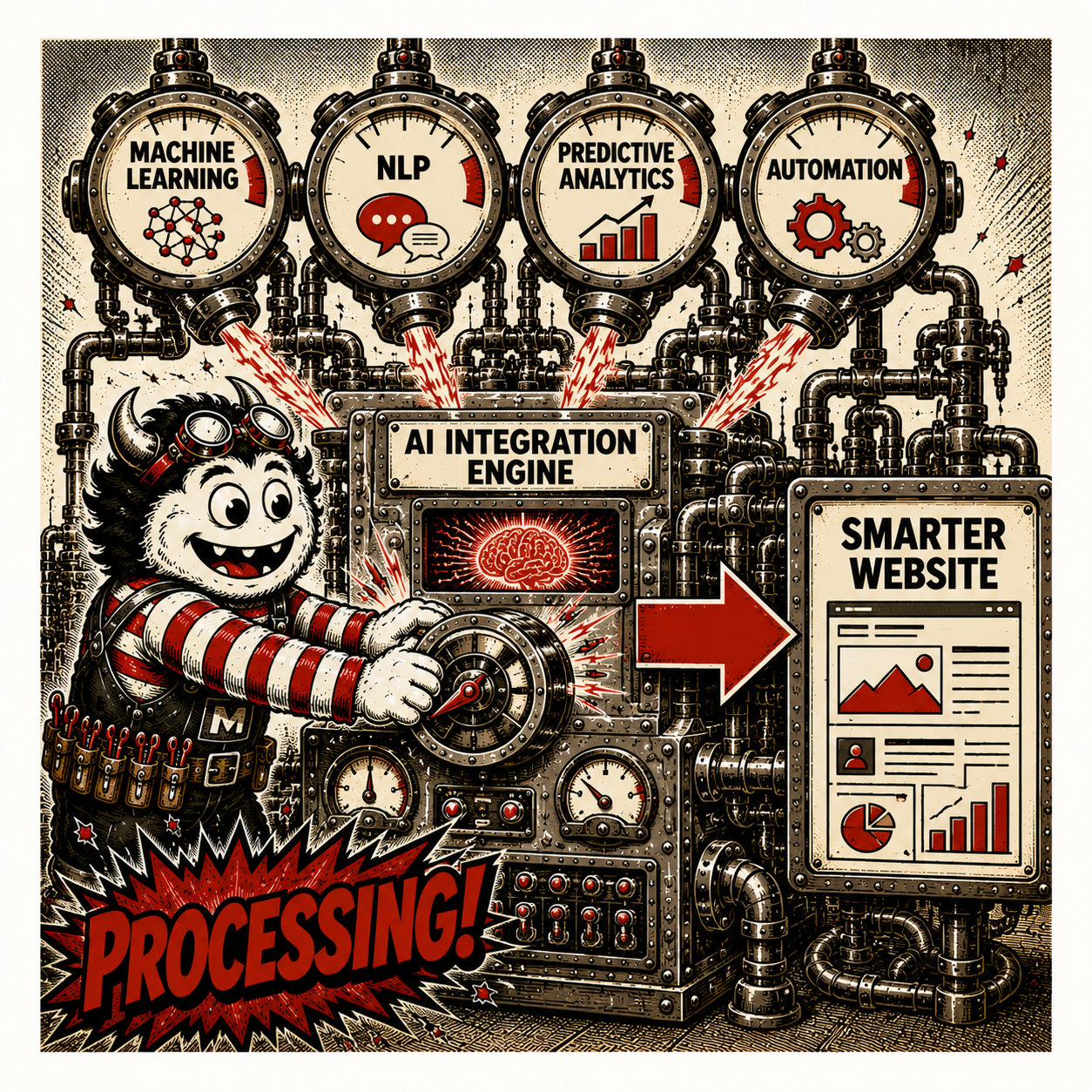
Four core technologies sit behind every effective AI-integrated website
1. Machine learning
Machine learning is the engine underneath personalization, recommendation, and performance optimization. It processes large volumes of behavioral data — clicks, scroll depth, time on page, exit points — to identify patterns and improve the site's response to each type of visitor. Over time, the site gets measurably better at converting the audiences it serves.
2. Natural language processing (NLP)
Natural language processing (NLP) enables AI chatbots and search functions to understand conversational queries — not just exact keyword matches. NLP is the technology that makes a website chatbot capable of handling a complex service enquiry at 11pm, qualifying the lead, and routing it to the right contact without human involvement.
3. Predictive analytics
Predictive analytics uses historical data to forecast future behavior. In a web design context, this means the site can predict when a visitor is about to leave, which product or service they are most likely to convert on, and what content will keep them engaged — then act on those predictions automatically.
4. Automation tools
Automation tools connect the site's AI layer to its operational systems — CRM, email marketing, scheduling, lead management. When a visitor fills in a form, watches a video, or triggers a specific behavior, automated workflows activate instantly, ensuring no lead falls through the gap between website and sales team.
How AI-Powered Automation Improves Website Performance
AI-powered automation removes the manual bottlenecks that hold most business websites back. Rather than relying on a developer or marketer to spot a problem and fix it, automation monitors, tests, and improves the site continuously in the background.
The performance gains are measurable. Over 90% of engineering teams now use AI in their workflows, with 62% reporting at least a 25% productivity gain. Developers using AI tools save 30 to 60% of their coding and testing time — 15 to 25 hours per month — which translates directly into faster updates, faster fixes, and faster launches.
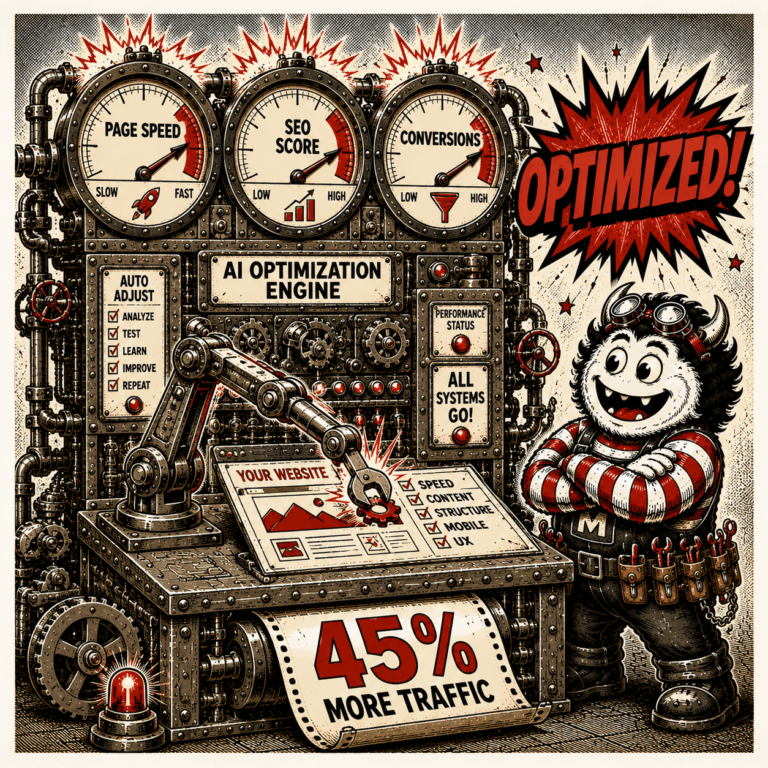
On the website itself, automation delivers:
- Content updates: Dynamic content blocks update automatically based on campaign, season, location, or user segment — no manual republishing required.
- Performance optimization: Page speed, image compression, Core Web Vitals, and caching configurations are monitored and adjusted automatically to maintain load times under three seconds.
- Continuous testing: Multivariate tests run across headlines, CTAs, and layouts simultaneously, with the best-performing variant automatically served to the majority of visitors.
- Reduced manual effort: Tasks that previously required weekly developer involvement — analytics review, content rotation, form testing — run on automated schedules, freeing the team for higher-value work.
AI-Powered Lead Generation and Customer Engagement
AI-powered lead generation shifts the website from a passive information resource to an active, always-on sales tool. Every visitor interaction becomes a data point, and AI uses those data points to identify the moments when engagement is highest and conversion is most likely.
The impact is documented. Businesses using AI for lead generation report a 50% increase in sales-ready leads and up to 60% lower customer acquisition costs. AI-driven traffic converts at 14.2%, compared to 2.8% from standard Google search.
Personalized CTAs: AI replaces fixed calls-to-action with dynamic ones that change based on visitor profile and behavior. A visitor from a construction company sees a different CTA than a visitor from a healthcare practice — even on the same page.
Smart forms: AI-optimized forms reduce friction by showing only the fields most relevant to a specific visitor type, increasing completion rates. Progressive profiling builds the visitor’s record over multiple interactions rather than front-loading a single long form.
- Behavioral targeting: AI identifies high-intent signals — multiple visits to a pricing page, returning visitors, specific scroll patterns — and triggers targeted content, offers, or chat prompts at the exact moment a visitor is most likely to convert.
Role of AI Chatbot Integration in User Experience
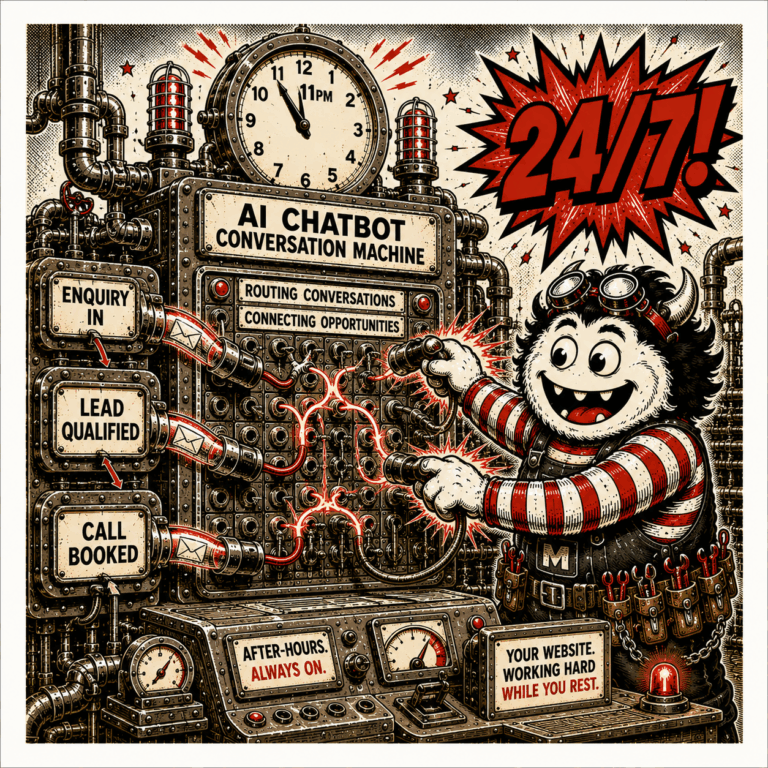
AI chatbot integration has become one of the highest-ROI additions a business website can make. The numbers are unambiguous: chatbots on websites produce 20 to 35% more leads, handle 68% of inquiries autonomously, and reduce support costs by 30%. Chatbot-led conversion funnels convert at 2.4 times the rate of static web forms.
The user experience case is equally strong. 82% of customers across all age groups expect instant responses to inquiries. AI chatbot usage peaks between 8pm and 11pm — when human support is unavailable — making after-hours coverage one of the clearest ROI drivers for any service business.
What modern AI chatbot integration delivers:
24/7 availability: Qualified responses to enquiries at any hour, with no staffing cost and no drop in quality between peak and off-peak hours.
Instant responses: Average AI chatbot response time is under two seconds. Compared to a follow-up email arriving the next morning, the conversion advantage is significant.
Lead qualification: AI chatbots ask structured qualification questions, score leads in real time, and route high-priority prospects directly to the sales team — or book a call automatically.
Customer satisfaction: 57% of companies report that chatbots deliver significant ROI within the first year. Average first-year ROI from AI lead generation chatbots runs between 148% and 200%.
Why Motion Monsters Leads in AI Web Design Integration
Motion Monsters builds AI-integrated websites for businesses that need more than a digital presence — they need a digital system that generates leads, qualifies prospects, and grows with the business.
Every project combines AI-powered website solutions with human creative strategy: custom chatbot integration, behavioral targeting, AI-driven content optimization, and performance monitoring built in from day one — not bolted on afterward. The focus is on conversion-focused design and scalable systems that compound in value over time, not templates that go stale after launch.
For businesses in New Jersey and across the US market, Motion Monsters provides the AI integration expertise to compete at the level the market now demands.
Why AI Website Optimization Is Critical for Growth
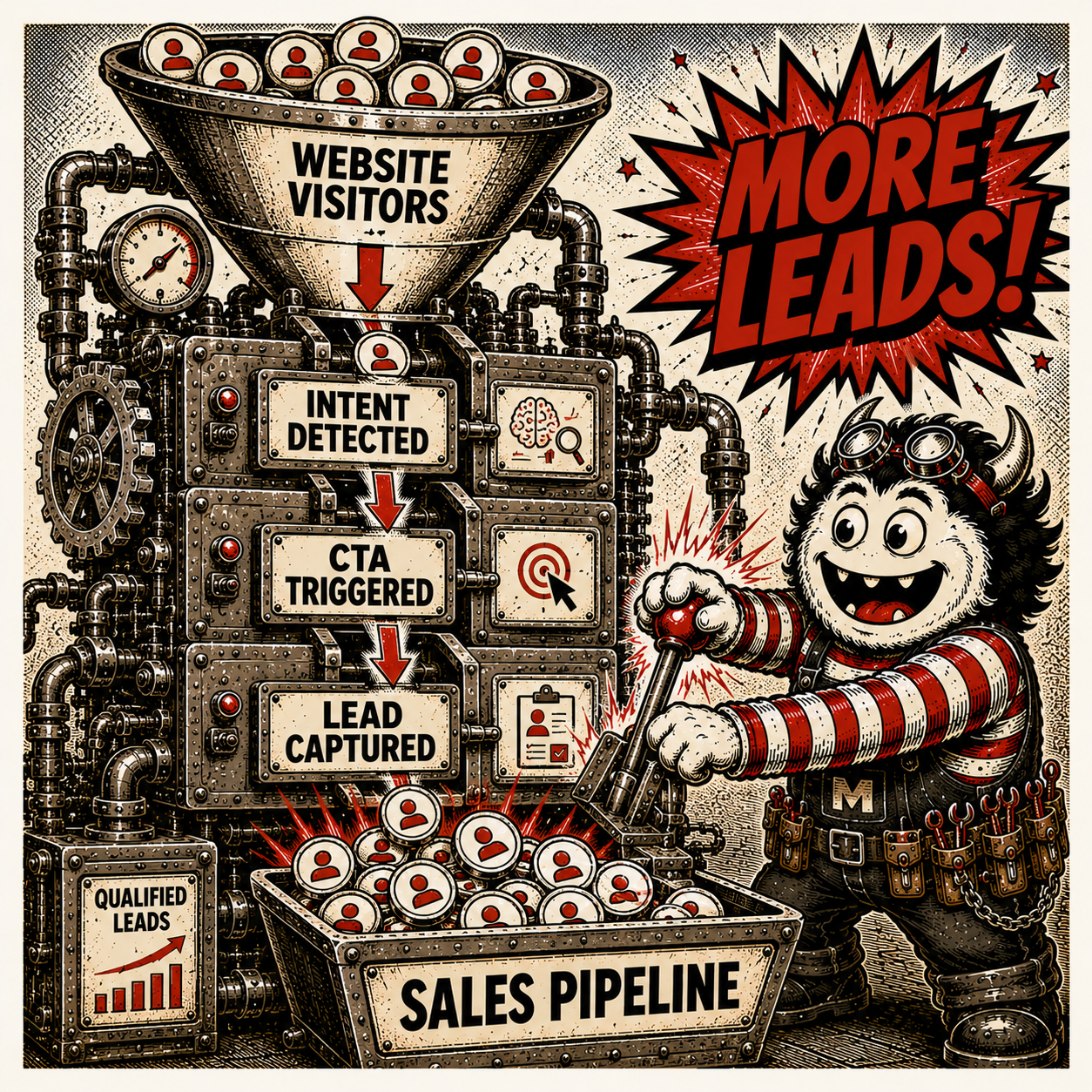
AI website optimization is the ongoing process of using AI to improve every performance dimension of a website — speed, UX, SEO, and conversion — continuously and automatically, without waiting for a quarterly review or a developer sprint.
The business case is straightforward. AI-driven SEO campaigns deliver a 45% increase in organic traffic and a 38% increase in conversion rates for e-commerce sites. 83% of large organizations report measurable SEO gains after integrating AI into their digital workflows.
The three pillars of AI website optimization:
Speed optimization: AI monitors load times, identifies bottlenecks, and adjusts image compression, caching, and code delivery automatically. A one-second improvement in page load time increases conversions by 2%. Sites consistently under three seconds outperform slower competitors in both rankings and user retention.
UX improvements: AI heatmaps and session analysis identify exactly where users drop off, which elements they engage with, and what layout changes improve flow. Every design decision is backed by live data rather than assumption.
SEO enhancements: AI optimizes content structure, heading hierarchy, meta data, and internal linking for both traditional Google search and AI-powered search platforms including ChatGPT and Google AI Overviews. Content optimized for AI search sees 30 to 40% higher visibility in generative search results.
Key Takeaways
Artificial intelligence integration transforms a business website from a static brochure into an intelligent, data-driven system that personalizes, automates, and continuously optimizes for performance.
AI chatbot integration produces 20 to 35% more leads, handles 68% of inquiries autonomously, and delivers average first-year ROI of 148 to 200%.
AI-powered automation saves development teams 30 to 60% of coding and testing time, accelerating launches and reducing ongoing management costs.
AI-driven SEO delivers a 45% increase in organic traffic and a 38% increase in conversion rates, while also improving visibility in AI-powered search platforms.
78% of companies have already adopted AI in at least one business function — businesses that have not yet integrated AI into their web presence are falling behind competitors that have.
Frequently Asked Questions
1. What is artificial intelligence integration in web design?
Artificial intelligence integration in web design means embedding machine learning, automation, and data-driven intelligence into a website’s structure and user experience. Rather than delivering a fixed experience to every visitor, an AI-integrated website adapts content, layout, and calls-to-action based on each visitor’s behavior, intent, and profile — improving engagement and conversion automatically.
2. How does AI improve a business website?
AI improves a business website across four areas: personalization (adapting content for each visitor), automation (running tests and updates without manual input), lead generation (identifying high-intent visitors and engaging them at the right moment), and performance optimization (continuously improving speed, UX, and SEO). The combined impact is a site that generates more qualified leads at lower cost than a static alternative.
3. What AI technologies power modern websites?
The four core AI technologies in modern web design are machine learning (behavioral analysis and personalization), natural language processing (chatbots and conversational search), predictive analytics (forecasting visitor behavior and intent), and automation tools (connecting the site to CRM, email, and lead management systems for seamless workflow).
4. How much does AI web design integration cost?
Costs vary significantly by scope. AI website builders start from $15 to $20 per month for basic builds. Custom AI integration — chatbots, personalization engines, predictive analytics, and automation workflows — is priced as a professional service and typically ranges from $5,000 to $50,000 depending on complexity. Most businesses see positive ROI within six to twelve months.
5. How long does AI website integration take?
Basic AI builder deployments can go live in hours. Custom AI integration projects — chatbots, personalization layers, and automation workflows — typically take four to twelve weeks depending on the scope of integration required and the complexity of existing systems.
6. Does AI integration improve SEO?
Yes, significantly. AI-driven SEO campaigns deliver a 45% increase in organic traffic and a 38% rise in conversion rates for e-commerce sites. AI also optimizes for generative search platforms including ChatGPT and Google AI Overviews, where content optimized for AI extraction sees 30 to 40% higher visibility.
7. What is AI-powered automation in web design?
AI-powered automation refers to website functions that run and improve without manual input — content updates, performance monitoring, A/B testing, lead routing, and more. Rather than a developer or marketer managing these tasks manually, AI handles them continuously in the background, freeing the team for higher-value work.
8. What is AI-powered lead generation?
AI-powered lead generation uses machine learning and behavioral data to identify high-intent visitors, engage them with personalized content and calls-to-action, and capture or qualify leads automatically. Businesses using AI for lead generation report a 50% increase in sales-ready leads and up to 60% lower customer acquisition costs compared to traditional web-based lead capture.
9. How do AI chatbots help with lead generation?
AI chatbots engage visitors in real-time conversations, answer service questions, qualify leads through structured dialogue, and route high-priority prospects to the sales team — or book a call automatically. Chatbot-led funnels convert at 2.4 times the rate of static web forms, and businesses report average first-year ROI of 148 to 200% from chatbot deployments.
10. Are AI chatbots available 24/7?
Yes. This is one of the primary advantages of AI chatbot integration. AI chatbots handle enquiries around the clock without staffing costs, with peak usage between 8pm and 11pm when human support is typically unavailable. 82% of customers across all demographics expect instant responses — AI chatbots meet that expectation at any hour.
11. What is AI website optimization?
AI website optimization is the use of AI to continuously improve site performance across speed, UX, SEO, and conversion — automatically and in real time. Rather than waiting for a quarterly audit, AI monitors live data, tests variations, and implements improvements as visitor behavior dictates, ensuring the site performs at its highest potential at all times.
12. How does AI personalization work on a website?
AI personalization works by analyzing each visitor’s device, location, browsing history, and on-site behavior to dynamically adjust content, layout, and calls-to-action. Two visitors on the same URL can see entirely different homepage content, CTAs, and product recommendations based on their individual profiles. 71% of customers expect this level of relevance from brands they engage with online.
13. Can a small business afford AI web design integration?
Yes. The range of options is broad. Entry-level AI website builders cost $15 to $20 per month and require no technical expertise. More sophisticated custom integrations are priced as professional services with a clear ROI case. Many small businesses start with a single AI feature — a chatbot, or AI-generated content — and expand as they see results.
14. How does AI integration affect website conversion rates?
AI integration improves conversion rates through personalization, optimized UX, faster load times, smarter CTAs, and chatbot-driven engagement. AI-driven traffic converts at 14.2% versus 2.8% from standard search. AI-powered personalization improves conversions by 20 to 30%, and chatbot funnels convert at 2.4 times the rate of static forms.
15. What is the ROI of AI web design integration?
ROI varies by deployment type. AI chatbots deliver average first-year ROI of 148 to 200%. AI-driven SEO campaigns deliver a 45% lift in organic traffic and 38% improvement in conversion rates. Broader AI integration in business functions shows a median ROI of 748% for well-executed strategies, according to Forrester Research.
16. Does AI integration work for service-based businesses?
Yes, and it is particularly effective for service businesses. AI chatbots qualify leads and book appointments around the clock. Personalized landing pages improve conversion for specific service areas. Automated follow-up workflows ensure no enquiry goes unanswered. Service businesses in healthcare, construction, legal, and professional services are among the strongest use cases for AI-integrated web design.
17. Will AI replace web designers and developers?
No. AI handles the repetitive, data-intensive parts of web design and development — layout generation, content drafting, performance testing, and ongoing optimization. Strategic, brand-level, and complex integration work still requires human expertise. Employment for web developers and designers is projected to grow 7% through 2034 according to the US Bureau of Labor Statistics.
18. How does AI chatbot integration improve customer satisfaction?
AI chatbots improve customer satisfaction by providing instant, accurate responses at any time of day or night. 57% of companies report significant ROI from chatbots within the first year, and 76% of millennials report positive experiences with AI chatbots. Customers spend an average of 4.2 minutes per chatbot conversation — a strong engagement signal that reflects quality of experience.
19. What is the difference between AI web design and traditional web design?
Traditional web design delivers a fixed, manually managed experience — the same layout, content, and CTAs for every visitor. AI web design delivers an adaptive, data-driven experience that changes based on individual visitor behavior and intent. AI also automates performance testing, content updates, and optimization tasks that previously required regular developer involvement and manual oversight.
20. How can Motion Monsters help with AI integration for my website?
Motion Monsters builds custom AI-integrated websites that combine personalization, chatbot lead generation, automation workflows, and AI-driven SEO from the ground up. Every project is designed around measurable business outcomes — more leads, better conversion rates, and scalable digital infrastructure that grows with your business. Request a Consultation to discuss your specific requirements.
The result is a website that performs — generating leads, driving calls, and supporting business growth for companies across New Jersey, from Bergen County to Hudson County and throughout the NJ/NYC metro area.
Ready to build a smarter website? Request a Consultation with Motion Monsters today.
Declan Foley is an Irish Creative Director with over 30 years of experience in design, motion, and visual storytelling. As Creative Director of Motion Monsters, he leads high-end video, motion graphics, drone production, and AI-integrated creative workflows for businesses across New Jersey and beyond. Explore what Motion Monsters can do for your business at motionmonsters.com.